
Answer at a glance: Yes—if you’re playing 1080p esports or older AAA titles, the RTX 2060 still delivers. But its 6 GB VRAM and struggling ray‑tracing capabilities now make it an entry‑level card, not a mid‑range option.
What is the RTX 2060 and where does it stand in 2026?
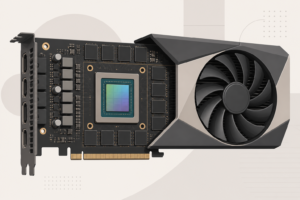
The RTX 2060 is a mid‑range Turing‑architecture GPU launched in early 2019. It included 6 GB of GDDR6 VRAM, RT cores for real‑time ray tracing, and Tensor cores enabling DLSS upscaling. ([tomshardware.com](https://www.tomshardware.com/reviews/nvidia-geforce-rtx-2060-ray-tracing-turing%2C5960.html))
In 2026, its specs now place it among entry‑level 1080p GPUs—as newer titles demand more VRAM and ray‑tracing horsepower.
Is RTX 2060 still good for 1080p gaming?
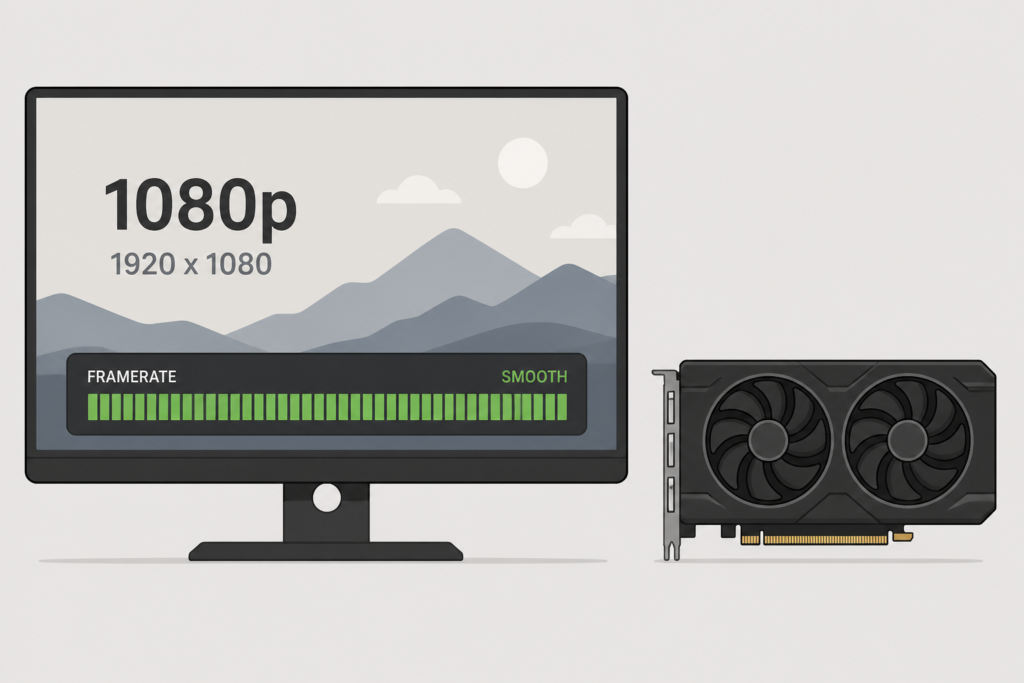
Yes—the RTX 2060 remains capable for 1080p gaming, particularly in esports or less demanding titles. Recent benchmarks show PUBG can hit ~109 fps and GTA V ~114 fps at high settings. ([canmypcrun.com](https://canmypcrun.com/blog/is-the-rtx-2060-good-for-gaming-in-2026))
It still outperforms GTX 1660 Super in raster performance and adds ray tracing and DLSS support. ([nvidiareview.com](https://nvidiareview.com/rtx-2060-vs-1660-super/))
According to resolution‑focused reviews, 1080p remains the RTX 2060’s sweet spot; 1440p is pushing its 6 GB VRAM limitations, while 4K is not feasible. ([specscalc.com](https://specscalc.com/is-rtx-2060-good-for-4k-1440p/))
How does the RTX 2060 handle ray tracing in 2026?
Ray tracing is now largely impractical at high settings. TechSpot revisits show that across a sweep of modern ray‑traced games at 1080p, only a few configurations hit 60 fps—even with DLSS upscaling and reduced presets. Many titles fall below 40 fps in average or 1% lows. ([techspot.com](https://www.techspot.com/review/2924-nvidia-not-fast-enough-ray-tracing/))
Even early marketing claims of 60 fps RT gaming are dated; while NVIDIA demos once cited Control or Metro at 60–79 fps with DLSS, those tests used significant upscaling techniques and low resolution input. ([nvidia.com](https://www.nvidia.com/en-in/geforce/news/geforce-rtx-2060-60-fps-ray-tracing/))
How does RTX 2060 compare with newer alternatives and in value?
On the used GPU market, the RTX 2060 still holds value—often beating the RTX 3050 in performance at similar cost. ([tomshardware.com](https://www.tomshardware.com/news/geforce-rtx-2060-best-nvidia-gpu-value))
However, modern alternatives like AMD RX 6600/6650 offer higher vanilla raster performance and more VRAM—all for similar used prices. ([tomshardware.com](https://www.tomshardware.com/news/geforce-rtx-2060-best-nvidia-gpu-value))
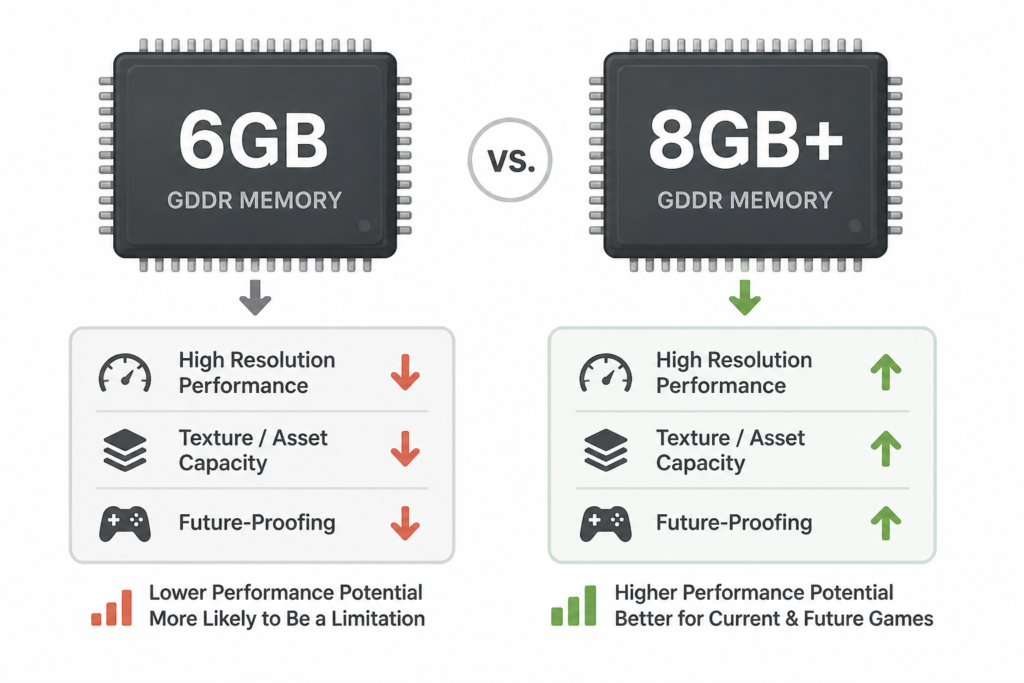
User forums in 2026 also reflect declining sentiment: many note the 6 GB VRAM limit is increasingly restrictive, even for medium settings, though DLSS helps. ([reddit.com](https://www.reddit.com/r/PcBuild/comments/1u04qbg/is_a_rtx_2060_outdated_today/))
Summary Comparison Table
| Use Case | RTX 2060 (2026) | Consider Upgrading If… |
|---|---|---|
| 1080p esports / older AAA | Smooth ≥ 60 fps on high | — |
| 1080p modern AAA | Medium → High ~60 fps; DLSS helps | Want ultra quality/settings |
| Ray tracing | Often < 40 fps; non‑viable in many games | Need playable RT at >= 60 fps |
| 1440p | Choppy; VRAM bottlenecks | Affordable 8 GB+ cards |
| Value | Good on tight budget | Similar price buys newer 8 GB GPU |
When should you keep the RTX 2060?
- You already own one and your games run fine.
- You’re gaming at 1080p and settings of Medium‑High. DLSS or FSR helps too.
- Your budget is ~US$100‑150 for a used GPU, and alternatives aren’t noticeably faster today.
When to consider upgrading?
- You want consistent ray tracing at playable frame rates.
- You’re targeting 1440p or ultra presets in modern AAA games.
- VRAM is bottlenecking newer titles—you frequently drop textures or hit stutters.
- Used alternatives like RX 6600/6650 with 8 GB VRAM are available for similar prices.
People Also Ask
Is the RTX 2060 still worth buying used in 2026? Yes—it’s a reasonable value for 1080p gaming if priced low. But only if modern cards with 8 GB+ VRAM aren’t available at similar cost.
Can it run modern AAA games? At 1080p and Medium‑High settings, yes. Frame rates hover around 60 fps in demanding titles; esports titles run much higher.
What about DLSS performance? DLSS (versions 2 or 3) can notably improve fps—especially at 1080p in titles with heavy settings—to regain smooth performance.
How bad is the VRAM limit? 6 GB is often enough at 1080p Medium but insufficient for high‑res textures or future‑proofing; expect texture downgrades or stuttering in newest titles.
Is upgrading to RX 6600 worth it? Typically yes—if you can find one within your budget. RX 6600/6650 offer better raw performance and more VRAM, improving longevity.
Frequently Asked Questions
1. Is the RTX 2060 obsolete in 2026? Not completely—it still handles 1080p gaming well. But it’s now firmly a budget-tier GPU and far from future‑proof.
2. What’s its ray‑tracing capability today? Very limited. Only a few titles run above 40 fps even with DLSS and low presets. Overall experience is compromised.
3. Will DLSS help keep it relevant? Yes—DLSS remains a key feature that salvages performance in many newer games, but support varies by title.
4. Is 6 GB VRAM too little? For some modern AAA titles and high-resolution textures, yes. At 1080p Medium it holds up, but many users report VRAM-related stuttering. ([reddit.com](https://www.reddit.com/r/PcBuild/comments/1u04qbg/is_a_rtx_2060_outdated_today/))
5. Should I save up for a current-gen GPU? If your budget allows, yes—current-gen cards bring more VRAM, stronger ray tracing, and longer lifespan. But if today’s budget only allows for used RTX 2060, it still works for certain scenarios.
About the Author
cloudgpuhub.com – Nhon Dang is a cloud infrastructure and operations professional with over 10 years of hands-on experience in cloud services, infrastructure, and business operations. His expertise spans design, deployment, and operation of cloud platforms and managed services, including VMs, Kubernetes, object storage, managed databases, Apache Kafka, and cloud GPU infrastructure. Nhon shares practical, experience-driven guidance that helps engineers and businesses make informed decisions—grounded in real-world scenarios.