
Here’s the short answer: For raw rasterized gaming at 1440p and AI workloads relying on GPU compute or VRAM, the Intel Arc B580 often edges the RTX 4060 due to its 12 GB frame buffer and favorable performance-per-dollar. At 1080p or in titles with CPU overhead or poor driver support, the RTX 4060 still holds ground.
This post may contain affiliate/partner links. If you buy or sign up through them, we may earn a commission at no extra cost to you.
Last updated: October 2, 2026
What are the Arc B580 and RTX 4060?
Arc B580 is a mid-range card based on Intel’s Xe² HPG (Battlemage) architecture, launched in December 2024, featuring 12 GB VRAM and targeting cost-effective 1080p/1440p gaming and workloads ([en.wikipedia.org](https://en.wikipedia.org/wiki/Intel_Xe)).
The RTX 4060 is Nvidia’s Ada Lovelace mainstream GPU, with 8 GB VRAM, DLSS support, and strengths in AI-enhanced features and traditional driver maturity ([en.wikipedia.org](https://en.wikipedia.org/wiki/GeForce_RTX_40_series)).
Which performs better in gaming benchmarks?
At 1440p, most reviews show B580 leading: TechSpot found ~5 % faster average across broad game sample; in some titles like Cyberpunk 2077, +15–29 % edge at 1080p/1440p ([techspot.com](https://www.techspot.com/review/2942-nvidia-rtx-4060-vs-intel-arc-b580/)). TechRadar reports consistent lead in Cyberpunk, Dying Light 2, Returnal ([techradar.com](https://www.techradar.com/computing/gpu/intel-arc-b580-vs-nvidia-rtx-4060)). Digital Trends notes 9 % lead including ray tracing ([digitaltrends.com](https://www.digitaltrends.com/computing/intel-arc-b580-vs-nvidia-rtx-4060/)). PCWorld internal claim was ~10 % at 1440p, though independent tests found only ~0.6 % overall with some titles widening to ~4 % ([pcworld.com](https://www.pcworld.com/article/2553897/intel-arc-b580-review-worthy-budget-1440p-gpu.html)).
Conversely, in broader 50-game tests with Ryzen 7 9800X3D CPU, Arc B580 averaged just 1 % slower at 1080p and 5 % faster at 1440p—a much narrower win ([reddit.com](https://www.reddit.com/r/hardware/comments/1i1uezw)). Many titles display wild swings: standout wins in Cyberpunk, Returnal, Riftbreaker, but notable losses in Starfield, Callisto Protocol, skull-and-bones crashes ([techspot.com](https://www.techspot.com/review/2942-nvidia-rtx-4060-vs-intel-arc-b580/)).
Hide the numbers in a table
| Use-case/Metric | Arc B580 | RTX 4060 |
|---|---|---|
| 1080p avg gaming | ~±5 % (varies by title) | Tied or slightly ahead in some |
| 1440p avg gaming | ~5–15 % faster overall | Lower VRAM can limit frame stability |
| Value (fps per $) | ~21–27 % better | Higher cost per frame |
| Driver consistency | Inconsistent; overheads on slower CPUs | Reliable and mature |
How do they compare in AI and creative workloads?
The RTX 4060 benefits from Nvidia’s mature CUDA ecosystem, DLSS/Frame Generation, and broad AI inference/training compatibility. Arc B580 lacks equivalent AI acceleration and driver-gen AI APIs, making it less favorable for serious AI engineering tasks.
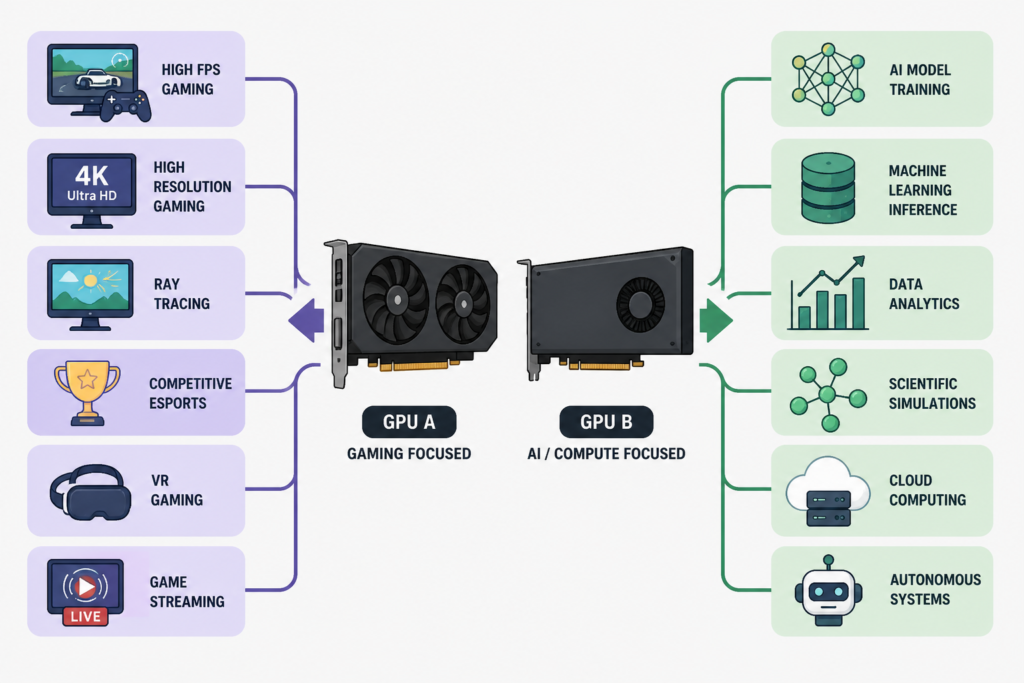
However, the B580’s 12 GB VRAM gives it theoretical advantage in memory-heavy workloads—even if raw compute is weaker. Still, without robust tooling support (TensorRT, cuDNN), it’s largely a gap-maker for larger models rather than a full GPU compute solution.
What about power, efficiency, and cost?
TechSpot reported that B580 offered ~21 % better cost-per-frame when considering updated benchmarks ([techspot.com](https://www.techspot.com/review/2942-nvidia-rtx-4060-vs-intel-arc-b580/)). Tech4Gamers measured ~0.278 fps/$ for B580 vs RTX’s better efficiency ~0.513 fps/W (power efficiency) ([tech4gamers.com](https://tech4gamers.com/graphics-card-comparison/rtx-4060-8gb-vs-intel-arc-b580-12gb/)). Engadget showed modest power draw: in Star Wars Outlaws, B580 drew ~22 % more than RTX at similar performance ([techspot.com](https://www.techspot.com/review/2935-intel-arc-b580/)).
Which card should you choose?
Go with Arc B580 if:
- You care about pure raster gaming value at 1440p and want the extra VRAM headroom.
- Your CPU is strong (e.g., Ryzen 7/Intel i7+) to avoid driver overhead penalties.
- You can tolerate driver immaturity and game-to-game variability.
Stick with RTX 4060 if:
- You need rock-solid, consistent performance across many titles with fewer glitches.
- You work in AI/ML workflows and need CUDA and DLSS/AI acceleration.
- You value power efficiency and driver stability more than a small price-performance edge.
Common questions: troubleshooting, drivers, future proofing
Arc often suffers worse 1% lows due to driver overheads on certain games and weaker CPUs ([techspot.com](https://www.techspot.com/review/2942-nvidia-rtx-4060-vs-intel-arc-b580/)). Intel has been releasing updates to address performance gaps ([pcgamer.com](https://www.pcgamer.com/hardware/graphics-cards/intels-quietly-buffed-its-gpu-drivers-to-fix-gaming-frame-rate-issues-with-some-older-processors/)).
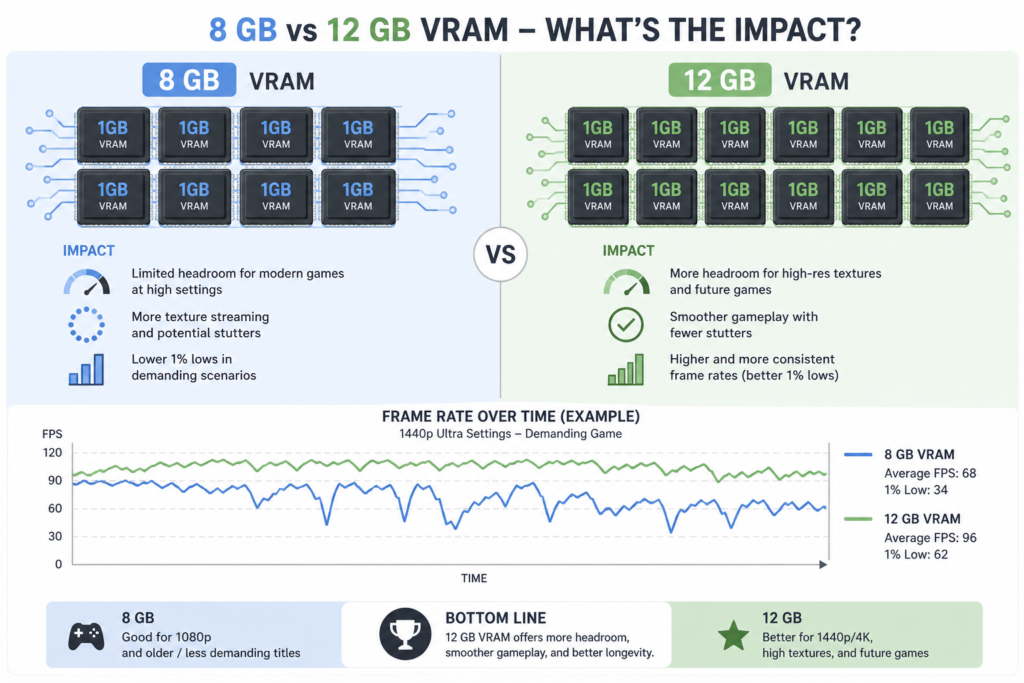
VRAM matters—8 GB is increasingly tight at 1440p and in open-world games; the B580’s 12 GB gives smoother frame time stability in such cases ([techspot.com](https://www.techspot.com/review/2935-intel-arc-b580/)).
Long-term support remains uncertain. Some users report concerns about Intel’s GPU market commitment ([reddit.com](https://www.reddit.com/r/PcBuild/comments/1u7hvnf/guys_intel_arc_b580_or_rtx_4060/)).