
Answer first: For local AI model workloads larger than about 7 GB VRAM, the RTX 3060 12 GB is the better choice thanks to its larger memory and bandwidth, even though the RTX 4060 8 GB is newer and more efficient.
This post may contain affiliate/partner links. If you buy or sign up through them, we may earn a commission at no extra cost to you.
What are the key hardware differences between the RTX 3060 12GB and RTX 4060 8GB?
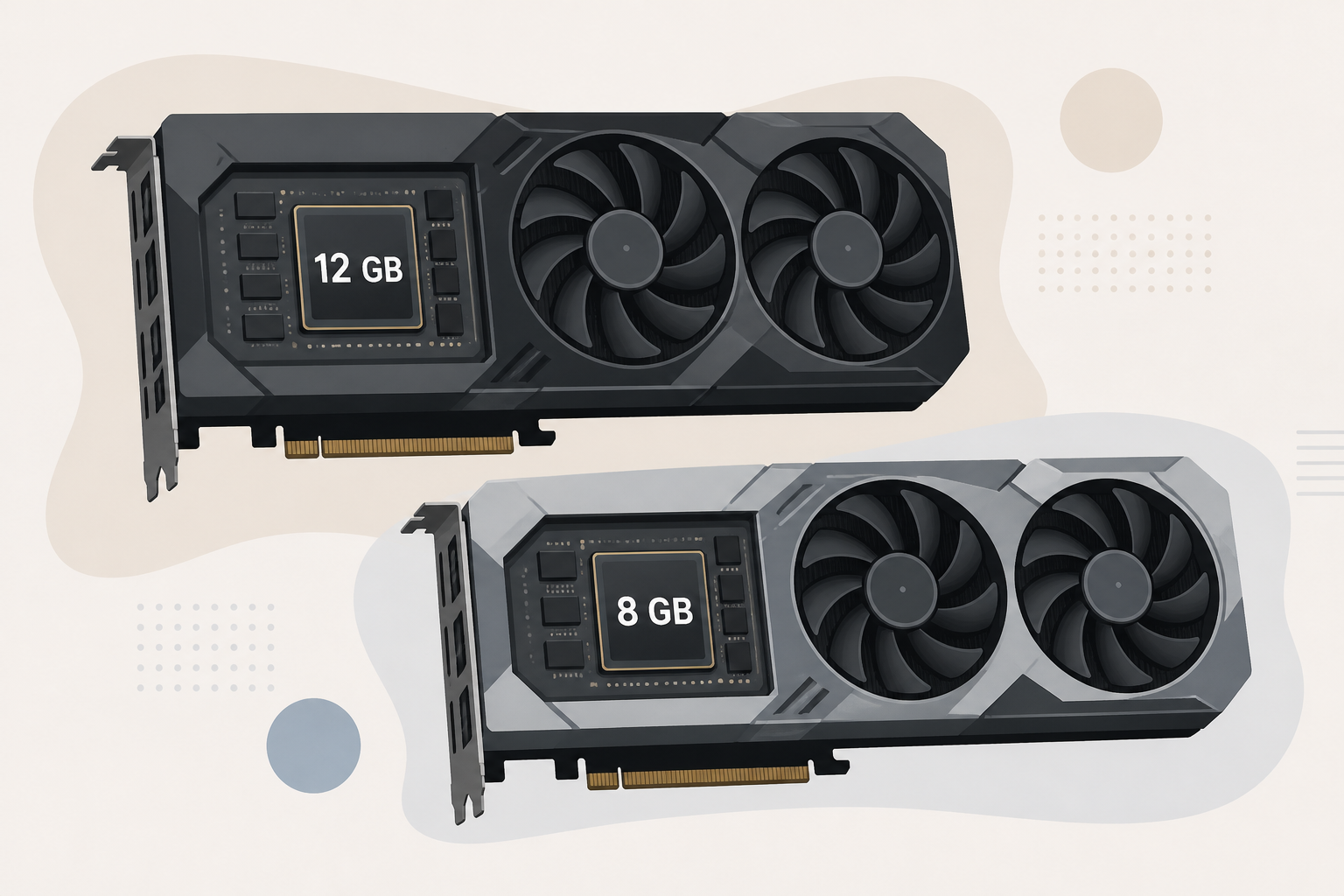
The RTX 3060 12 GB is built on Nvidia’s Ampere architecture (GA106), launched in early 2021, and includes 3,584 CUDA cores, 12 GB GDDR6 memory on a 192‑bit bus, and around 360 GB/s memory bandwidth ([techspot.com](https://www.techspot.com/specs/gpu/223291-nvidia-geforce-rtx-3060-12gb.html)). The RTX 4060 8 GB, released mid‑2023 on the newer Ada Lovelace architecture (AD107), uses 3,072 CUDA cores, just 8 GB on a 128‑bit bus, and roughly 272 GB/s memory bandwidth ([tomshardware.com](https://www.tomshardware.com/pc-components/gpus/rtx-4060-vs-rtx-3060-12gb-gpu-faceoff?)).
Despite fewer CUDA cores, the RTX 4060 has higher boost clock speeds, significantly larger L2 cache (24 MB vs 3 MB), better process efficiency (TSMC 4N vs Samsung 8N), and support for DLSS 3 and AV1 encoding ([tomshardware.com](https://www.tomshardware.com/pc-components/gpus/rtx-4060-vs-rtx-3060-12gb-gpu-faceoff)).
Why does VRAM matter so much for AI workloads?
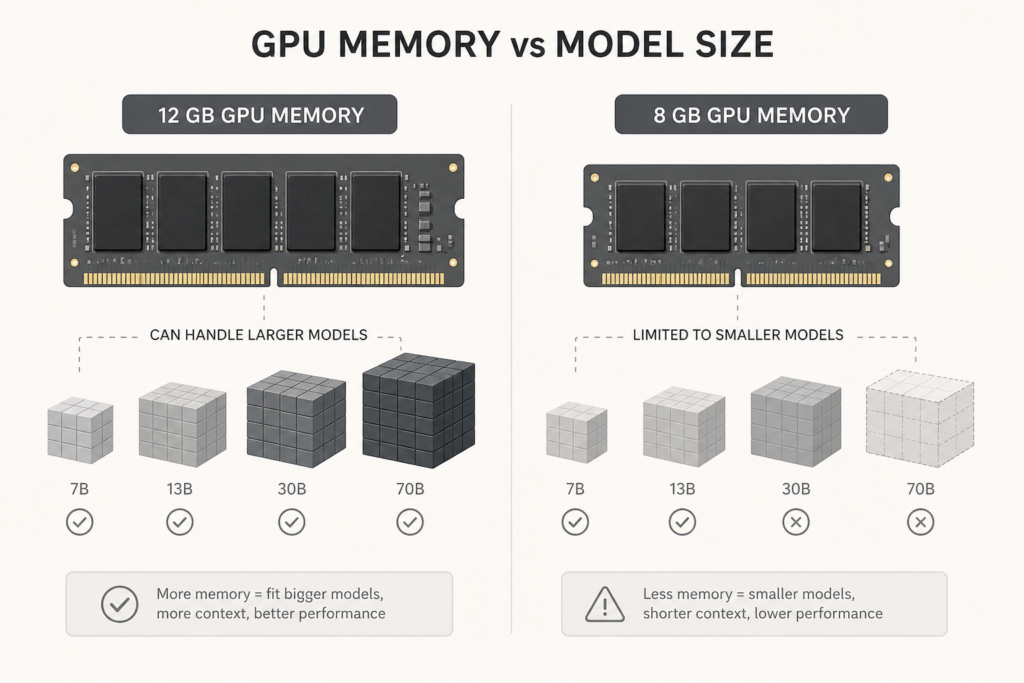
Local AI inference (e.g., running LLMs) is constrained by both VRAM capacity and memory bandwidth. Models above ~7 GB cannot fully fit into the RTX 4060’s 8 GB VRAM, triggering offload over PCIe—resulting in steep performance penalties ([localaimaster.com](https://localaimaster.com/blog/rtx-4060-vs-3060-ai)).
The RTX 3060 not only holds larger models entirely on‑card but also delivers ~32 % higher bandwidth (360 vs 272 GB/s), directly translating to higher tokens/sec throughput when models fit in VRAM ([localaimaster.com](https://localaimaster.com/blog/rtx-4060-vs-3060-ai)).
When does the RTX 4060 8 GB outperform the 3060 for AI?
For small models below ~7 GB, both GPUs can load the entire model into VRAM. In these scenarios, Ada’s larger L2 cache helps the 4060 offset its bandwidth deficit, making its raw inference performance competitive or even faster ([localaimaster.com](https://localaimaster.com/blog/rtx-4060-vs-3060-ai)).
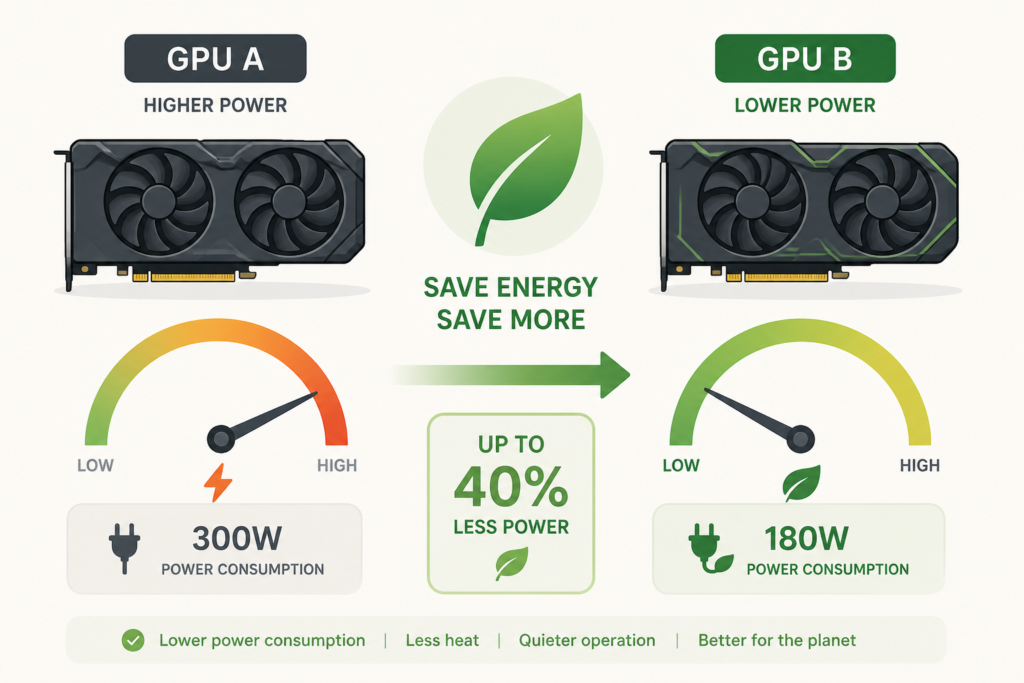
Plus, the RTX 4060 offers benefits in power draw (around 115 W vs 170 W), thermal efficiency, and compact size—advantages for energy-conscious setups or small form factor builds ([tomshardware.com](https://www.tomshardware.com/pc-components/gpus/rtx-4060-vs-rtx-3060-12gb-gpu-faceoff)).
Performance Comparison Table: Key Metrics
| Metric | RTX 3060 12 GB | RTX 4060 8 GB |
|---|---|---|
| VRAM Capacity | 12 GB | 8 GB |
| Memory Bandwidth | ~360 GB/s | ~272 GB/s |
| L2 Cache | ~3 MB | ~24 MB |
| Power Draw (TDP) | ~170 W | ~115 W |
| AI Model Fit Capability | Up to ~12 GB | Up to ~8 GB (offload above ~7 GB) |
| Inference Throughput (model ≤7 GB) | Baseline | Often close or slightly better (cache helps) |
Which should you choose for your AI workloads?
- Check your model size. If your LLM or AI workload exceeds about 7 GB when quantized, the RTX 3060 12 GB is the practical choice to avoid PCIe offloading overheads.
- Consider efficiency and features. If your model is small and you value low power draw, DLSS 3, AV1 encoding, or compact systems, the RTX 4060 8 GB becomes more compelling.
- Think long-term. The 12 GB capacity of the RTX 3060 gives more headroom for future, larger models; the RTX 4060 could hit limits sooner.
- Price vs availability. Used RTX 3060 12 GB cards are often accessible and represent great value for local AI, though new RTX 4060 cards may offer warranty and efficiency advantages ([insiderllm.com](https://insiderllm.com/pdfs/rtx-3060-vs-3060ti-vs-3070-local-ai.pdf)).
Inline Illustration – VRAM vs Throughput
Below is a conceptual view showing how the RTX 3060’s larger VRAM capacity supports larger LLMs, while the RTX 4060 relies on cache and offloading.
Inline Illustration – Efficiency & Power
This illustration highlights the power and thermal differences, showing how the RTX 4060 delivers similar AI speed at lower wattage.
Summary Recommendation
• For AI models above ~7 GB VRAM: RTX 3060 12 GB wins on capacity and bandwidth.
• For smaller AI tasks or when power, size, and modern features matter: RTX 4060 8 GB may outperform in efficiency and features.
Frequently Asked Questions
- Is the RTX 3060 12 GB always better for AI? It’s better for model sizes above ~7 GB due to VRAM and bandwidth. For smaller models, the RTX 4060 can match or exceed in throughput thanks to cache.
- What happens when the RTX 4060 runs out of VRAM? It will offload data over PCIe, significantly slowing performance due to bandwidth mismatch between GPU and system RAM.
- Can the RTX 3060 12 GB run any current LLM? It can handle many 8 B models and often smaller 14 B models (quantized), but larger models (30 B+) still require more-capacious GPUs.
- How much power can I save with the RTX 4060? TDP is ~115 W vs ~170 W—this can translate to tangible savings over long-term regular usage.
- Are there better alternatives? Yes—GPUs like the RTX 4060 Ti 16 GB or higher-tier Ada cards offer both large VRAM and modern features, albeit at higher cost.
About the Author
cloudgpuhub.com – Nhon Dang is a cloud infrastructure and operations professional with over 10 years of hands-on experience in cloud services, infrastructure, and business operations. His expertise spans the design, deployment, and operation of cloud platforms and managed services, including virtual machines (VMs), Kubernetes (K8s), object storage (S3), managed databases, Apache Kafka, and cloud GPU infrastructure.
Throughout his career, Nhon has worked closely with cloud infrastructure and service operations, gaining practical experience in building reliable, scalable, and cost-efficient cloud environments. His work combines technical expertise with business and operational insight, giving him a practical perspective on how cloud technologies perform in real-world production environments.
Nhon writes about cloud infrastructure, Kubernetes, DevOps, distributed systems, cloud computing, infrastructure operations, and cloud service management, sharing insights based on hands-on experience rather than purely theoretical knowledge.