
In 2026, ROCm often delivers within 5–10% of CUDA on standard PyTorch and LLM inference workloads, while offering up to 40% lower hardware cost—yet CUDA still dominates in specialized libraries, developer tooling, and ecosystem depth.
This post may contain affiliate/partner links. If you buy or sign up through them, we may earn a commission at no extra cost to you.
Why compare ROCm vs CUDA in 2026?
Understanding the current strengths, weaknesses, and trade‑offs between AMD’s open ROCm stack and NVIDIA’s established CUDA platform is critical if you’re building or operating AI infrastructure cost‑efficiently.
How close is ROCm to CUDA in performance?
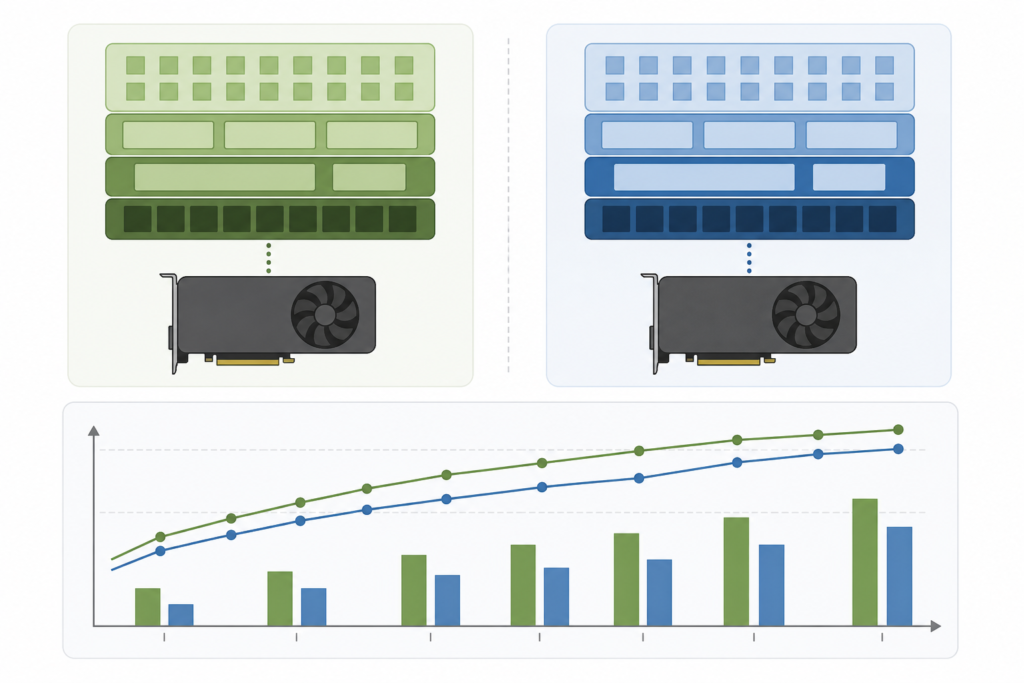
ROCm has made substantial progress in narrowing the performance gap.
- On standard PyTorch or vLLM inference using AMD’s MI355X vs NVIDIA H100, ROCm now runs within 5–10% of CUDA performance in real workloads. ([thundercompute.com](https://www.thundercompute.com/blog/rocm-vs-cuda-gpu-computing))
- MLPerf Inference 6.0 data on server inference shows MI355X achieving within ~5% of equivalent B200 performance. ([thundercompute.com](https://www.thundercompute.com/blog/rocm-vs-cuda-gpu-computing))
- For large‑scale training workloads, benchmarks indicate ROCm on MI300X reaches ~94% throughput of CUDA baseline, with ~8% gap on 70B‑parameter transformer training. ([gpuadvisor.com](https://gpuadvisor.com/blog/cuda-vs-rocm-2026))
- But CUDA still leads in workloads using TensorRT‑LLM or FlashAttention 3, where ROCm lacks full-featured equivalents, resulting in 20–40% slower execution. ([thundercompute.com](https://www.thundercompute.com/blog/rocm-vs-cuda-gpu-computing))
Which GPUs each ecosystem supports?
CUDA’s hardware support is universal across NVIDIA GPUs—from GeForce to datacenter models.
ROCm is rapidly expanding parity:
- Supported AMD hardware now includes Instinct MI-series (MI355X, MI350X), Radeon RX 9000-series, and Ryzen AI, with improving virtualization and GPU partitioning features. ([thundercompute.com](https://www.thundercompute.com/blog/rocm-vs-cuda-gpu-computing))
- ROCm 10 introduces ROCm.AI, an AI-native platform with tools like ROCm Hyperloom, Console, CLI tools (install, doctor, serve), agentic optimizers and diagnostics for smoother deployment across AMD hardware. ([newsroom.amd.com](https://newsroom.amd.com/news/rocm-10-software-ai-native-developer-experiences/))
What about ecosystem and developer experience?
CUDA remains the de facto standard, with first-to-market framework updates, mature libraries, and extensive documentation.
ROCm is closing the gap:
- Official support for PyTorch, vLLM, SGLang, JAX, TensorFlow on ROCm 10 is now available. ([rocm.docs.amd.com](https://rocm.docs.amd.com/en/latest/about/release-notes.html))
- AI‑native tooling in ROCm 10 (Hyperloom, Console, ROCm.AI) improves onboarding, diagnostics, and optimization workflows. ([amd.com](https://www.amd.com/en/blogs/2026/rocm-ai-the-ai-native-developer-experience-for-building.html))
- Open‑source nature enables custom workflows, but documentation and stability can lag behind CUDA, especially on local or mixed systems. ([reddit.com](https://www.reddit.com/r/vibecoding/comments/1t17xbv/rocm_vs_cuda_for_local_llms_in_2026_still_worth_it/))
How do costs compare?
Hardware cost advantages favor AMD/ROCm. Reports show ROCm setups can be 15–40% cheaper for comparable compute capacity. ([thundercompute.com](https://www.thundercompute.com/blog/rocm-vs-cuda-gpu-computing))
That said, hidden costs exist:
- ROCm setup complexity, compatibility quirks, and slower trajectory for specialized library support can add engineering labor cost.
- CUDA’s mature ecosystem and vendor support often accelerate time‑to‑value—worth evaluating versus raw price. ([thundercompute.com](https://www.thundercompute.com/blog/rocm-vs-cuda-gpu-computing))
Are there real‑world migrations or deployments?
- Meta has committed to deploying up to 6 GW of custom AMD Instinct MI450 infrastructure running ROCm-based infrastructure in H2 2026—signaling production-grade adoption. ([thundercompute.com](https://www.thundercompute.com/blog/rocm-vs-cuda-gpu-computing))
- Partnerships like AMD‑Anthropic are working to optimize CROcm workloads with Claude model support—indicating growing ecosystem engagement. ([cincodias.elpais.com](https://cincodias.elpais.com/companias/2026-07-22/amd-y-anthropic-sacuden-la-ia-con-una-alianza-estrategica-que-incluye-una-inversion-de-5000-millones-de-dolares.html))
When should you choose ROCm—and when stick with CUDA?
| Scenario | Choose ROCm | Choose CUDA |
|---|---|---|
| Standard PyTorch / vLLM workloads | Near‑parity performance at lower cost | Still more mature support; fewer issues |
| LLM inference with specialized CUDA libraries | Missing libraries: 20–40% slower | Best performance and availability |
| Large‑scale deployments or service engineers | High cost efficiency if you can manage complexity | Faster deployment, better support, less debugging |
| Cross‑architecture portability | HIP abstraction and ROCm.AI tooling | CUDA is locked‑in, but consistent |
How do you port CUDA code to ROCm?
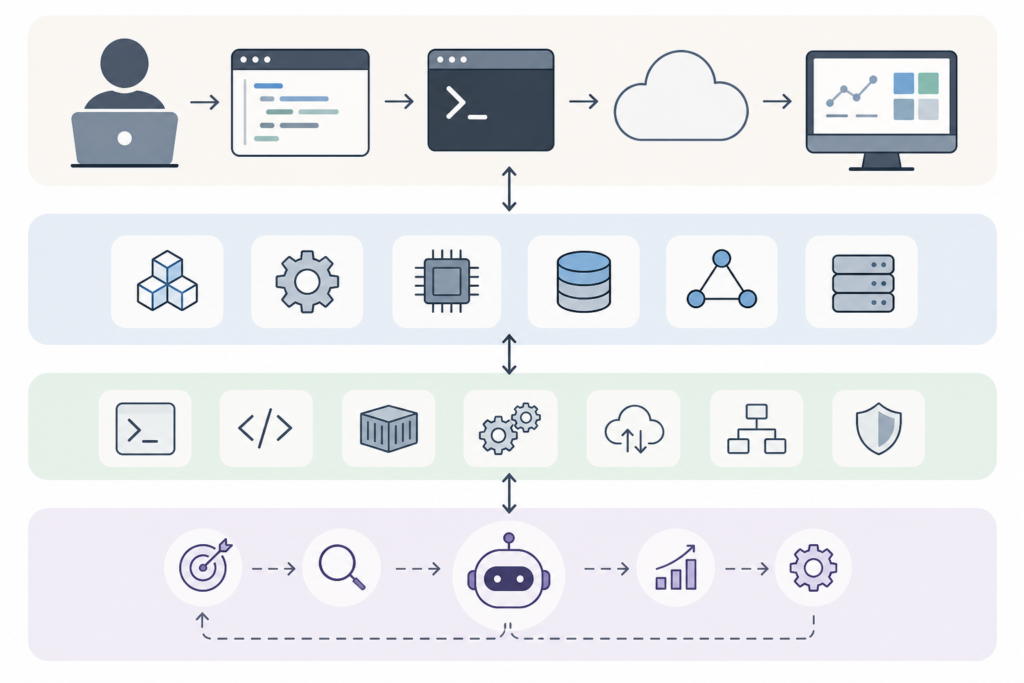
- Use HIPIFY to convert CUDA C++ code into HIP portable code. ([amd.com](https://www.amd.com/en/blogs/2026/from-cuda-to-amd-rocm-software-without-starting-over.html))
- Leverage HIP cooperative groups, mempool APIs, and profiling compatibility introduced in ROCm 10 to mirror CUDA patterns. ([rocm.docs.amd.com](https://rocm.docs.amd.com/en/latest/about/release-notes.html))
- Use ROCm.AI tools like
rocm doctor, Console, and Hyperloom to validate, diagnose, and optimize workloads. ([amd.com](https://www.amd.com/en/blogs/2026/rocm-ai-the-ai-native-developer-experience-for-building.html)) - Test across AMD GPUs (Instinct, Radeon, Ryzen AI), and iterate with profiling feedback to narrow performance gaps. ROCprofiler-SDK helps in tracing. ([rocm.docs.amd.com](https://rocm.docs.amd.com/en/latest/about/release-notes.html))
Frequently Asked Questions
Is ROCm free and open‑source?
Yes. ROCm is open‑source and freely available, while CUDA is proprietary to NVIDIA. That gives ROCm flexibility in deployment and customization—but documentation and stability vary by platform.
Can I run the same code on ROCm and CUDA?
Using HIP, you can write portable code. HIPIFY tools convert CUDA code, and ROCm HIP APIs now include many CUDA‑parity features like cooperative groups and memory pools. However, specialized CUDA-only libraries (TensorRT‑LLM, FlashAttention 3) are still missing equivalents in ROCm. ([amd.com](https://www.amd.com/en/blogs/2026/from-cuda-to-amd-rocm-software-without-starting-over.html?utm_source=openai))
How stable is ROCm in production?
Stability has improved, especially with ROCm 10 introducing ROCm.AI diagnostics and agentic optimization. Huge deployments from Meta also signal confidence. But edge cases and GPU-specific issues can still surface, so thorough validation is critical. ([amd.com](https://www.amd.com/en/blogs/2026/rocm-ai-the-ai-native-developer-experience-for-building.html?utm_source=openai))
When will ROCm fully match CUDA?
ROCm is already near parity on many workloads, but full feature and ecosystem parity—especially around specialized NVIDIA libraries—will take longer, likely driven by industry demand and open‑source strategy.
Does ROCm support Windows?
Yes, ROCm now supports Windows in addition to Linux, with growing coverage across GPUs and PyTorch builds. ([newsroom.amd.com](https://newsroom.amd.com/news/amd-expands-ai-leadership-across-client-graphics/?utm_source=openai))
Should I hybridize? Use both CUDA and ROCm?
That’s viable for flexibility: develop on ROCm where possible, fall back to CUDA for specialized libraries or stability. Tools like HIP help keep code portable, but doubling your toolchain can add complexity.
About the Author
cloudgpuhub.com – Nhon Dang is a cloud infrastructure and operations professional with over 10 years of hands‑on experience in cloud services, infrastructure, and business operations. His expertise spans design, deployment, and operation of cloud and GPU environments. Nhon writes with practical, experience-driven insight to help teams make better decisions in cloud GPU adoption.